


Fuel Theft Is Hitting Britain’s Family-Run Petrol Stations Hard And Honest Customers Are Paying The Price

Catch a Thief UK News Investigates The Growing Crisis Facing Independent Petrol Forecourts Across Britain
Across the United Kingdom, independent petrol stations and family-run forecourts are facing increasing financial pressure from organised fuel theft, unpaid fuel incidents, rising operational costs and retail crime.
While many motorists assume petrol stations generate large profits from fuel sales, the reality for independent operators is very different.
Industry data and forecourt operators have repeatedly highlighted that profit margins on fuel are often extremely small, sometimes amounting to only a few pence per litre once wholesale fuel costs, VAT, electricity, wages, insurance, business rates, payment processing charges and site maintenance are taken into account.
For many independent forecourts, the convenience store attached to the pumps is what keeps the business alive.
The sale of groceries, coffee, tobacco products, snacks, hot food, drinks and household essentials often provides significantly higher profit margins than fuel itself. This means that many local petrol stations operate not simply as fuel providers, but as vital community retail hubs supporting local jobs and services.
What many customers also do not realise is that numerous petrol stations displaying major fuel brands are not necessarily owned directly by multinational oil companies.
Across the UK, many forecourts operating under well-known names such as BP, Shell, Esso, Texaco, Gulf, Spar and Morrisons Daily are independently owned franchise operations or are operated by regional fuel groups and local family businesses under supply agreements.
Even some Morrisons petrol stations are operated through partnerships and independent fuel retail groups rather than directly by the supermarket chain itself.
This means fuel theft does not simply impact large corporations , it often directly harms local business owners, independent operators, staff and the communities they serve.
The Real Cost Of Fuel Theft
Fuel theft, commonly referred to as “bilking” or “making off without payment,” has become an increasing problem for UK forecourt retailers.
There are generally two common forms of non-payment incidents:
- Deliberate drive-offs where suspects leave immediately without attempting payment.
- “No Means of Payment” incidents where individuals claim they have forgotten their wallet, card or means to pay after dispensing fuel.
The Association of Convenience Stores (ACS) has warned that fuel theft continues to place additional pressure on forecourt retailers already dealing with rising levels of retail crime and abuse towards staff.
For independent petrol stations operating on tight margins, repeated losses from unpaid fuel can quickly become financially damaging.
Each incident can involve:
- Direct financial loss.
- Staff time and administration.
- CCTV evidence review.
- DVLA tracing costs.
- Security investment.
- Increased insurance pressures.
- Stress and abuse towards retail workers.
Ultimately, these losses do not disappear.
Many retailers argue that increasing theft across the retail sector contributes towards higher prices for paying customers as businesses attempt to recover losses and remain financially sustainable.
Smaller rural and community forecourts are particularly vulnerable because they often lack the financial resilience of larger national supermarket chains.
As one independent forecourt operator recently explained in national media:
“We’re a small business. We just can’t afford these losses.”

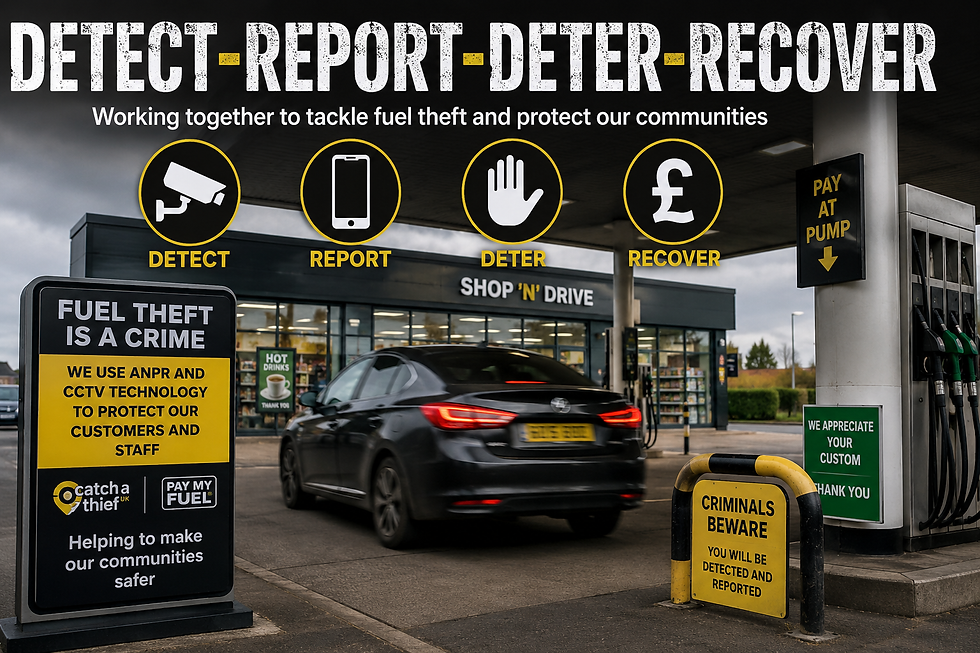
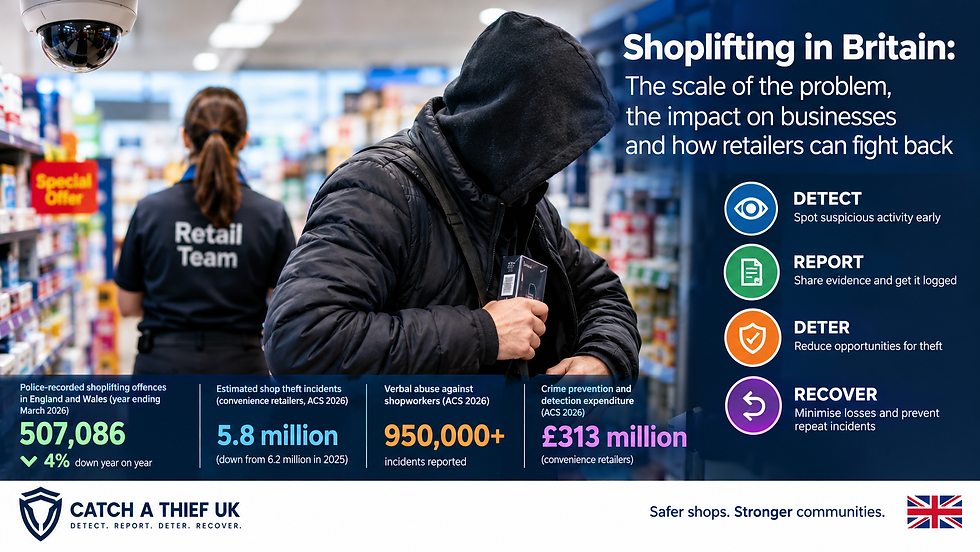
Detect – Report – Deter – Recover
In response to rising fuel theft and retail crime, organisations such as "Catch a Thief UK" and "Pay My Fuel" are working with petrol stations and retailers across the United Kingdom to help tackle unpaid fuel incidents and reduce losses.
Catch a Thief UK is a leading digital crime prevention and retail security platform working alongside retailers, businesses and crime prevention organisations nationwide.
Through a strategic partnership with Pay My Fuel, the organisations say they are helping forecourt operators:
- Detect suspected fuel theft.
- Report incidents to police and relevant agencies.
- Deter repeat offending.
- Recover losses on behalf of retailers.
Their approach combines CCTV evidence analysis, vehicle tracing, public awareness campaigns, ANPR technology, incident intelligence gathering and civil recovery processes.
According to Catch a Thief UK, their systems are used to support hundreds of forecourts and retailers throughout Britain, including independent operators and major forecourt groups.
The partnership also aims to educate motorists about the serious legal consequences of deliberately leaving a forecourt without paying for fuel.
Under the Theft Act 1978, “Making Off Without Payment” is a criminal offence where a person dishonestly leaves without paying for goods or services that require immediate payment.
Additionally, providing false details or using cloned, false or stolen registration plates may constitute offences under the Fraud Act 2006.
Balancing Enforcement And Fairness
As fuel recovery systems and ANPR enforcement technologies become more common across UK forecourts, there have also been discussions surrounding accuracy, disputed claims and consumer rights.
Some motorists have publicly challenged fuel recovery notices, claiming administrative errors, banking issues or payment disputes.
This highlights the importance of:
- Accurate evidence gathering.
- Fair appeals procedures.
- Proper investigation of disputed cases.
- Responsible use of ANPR and tracing systems.
Most reputable recovery operators stress that genuine mistakes can occur and should be resolved fairly and proportionately while still protecting retailers from deliberate criminality.
At the same time, retailers argue that without stronger enforcement and recovery systems, many independent forecourts would struggle to survive sustained levels of fuel theft.
Protecting Local Businesses And Communities
Independent petrol stations are often far more than simply places to buy fuel.
Many provide:
- Local employment.
- Essential convenience shopping.
- Parcel collection services.
- ATM access.
- Community support.
- Late-night retail access.
- Rural fuel availability.
When repeated theft and anti-social behaviour impact these businesses, the effects can ripple throughout entire communities.
Catch a Thief UK says its wider mission is focused on “Helping To Make Our Communities Safer – Better Places” through crime prevention, public awareness and retailer support.
As retail crime continues to rise across Britain, many independent retailers believe stronger collaboration between businesses, communities, police and crime prevention organisations will be essential to protect local services and prevent honest customers from ultimately paying the price for criminal behaviour.

For family-run forecourts operating on tight margins, tackling fuel theft is no longer just about recovering losses it is about survival.


Comments