


Britain’s Retail Crime Crisis: Theft, Violence and Fuel Fraud Spiralling Across the UK

Catch a Thief UK News | SPECIAL REPORT
Retail theft and abuse against shopworkers has become one of the fastest-growing crime problems facing the United Kingdom. What was once viewed as opportunistic shoplifting has now evolved into a far wider issue involving organised criminal gangs, repeat offenders, fuel theft, violent abuse, intimidation and daily attacks on frontline retail staff.

Across Britain, retailers are warning that the situation is no longer isolated or manageable through traditional store security alone. Many businesses now describe retail crime as “systemic”, with stores facing daily losses and staff increasingly fearing for their safety at work.
According to the UK Government’s latest retail crime factsheet, police recorded 516,971 shop theft offences in England and Wales in the year ending December 2024, the highest figure since current records began in 2002/03.
However, industry leaders believe the real number is far higher due to thousands of incidents going unreported every week. Many retailers say staff have lost confidence that offenders will be caught or prosecuted, particularly for lower-value thefts.
The British Retail Consortium estimates that retail theft is now costing UK businesses more than £2.2 billion every year. Some industry reports suggest there are now over 20 million theft incidents annually — equivalent to around 55,000 thefts every single day.
Violence and Abuse Towards Shopworkers Rising Sharply
The crisis extends far beyond stolen goods.
Retail workers across the UK are increasingly facing:
Verbal abuse
Threats of violence
Racist and sexual abuse
Physical assaults
Knife threats
Spitting
Intimidation by organised groups
Aggressive repeat offenders
Government figures show there were approximately 737,000 incidents of violence and abuse against retail workers in a single year, the equivalent of more than 2,000 incidents every day.

The latest Usdaw Freedom From Fear Survey found:
78% of retail workers suffered verbal abuse
54% were threatened
11% were physically assaulted
The Association of Convenience Stores also reported over 1.2 million incidents of verbal abuse and tens of thousands of violent incidents in convenience stores alone.
Many retailers say offenders are becoming increasingly brazen, often stealing openly in front of staff and customers. Organised gangs are reportedly targeting stores systematically, filling bags, suitcases and even wheelie bins with stock before calmly walking out.
Organised Crime Driving Retail Losses
Retailers and police believe much of the increase is now linked to organised criminal networks rather than isolated opportunistic theft.
High-value stolen items frequently include:
Alcohol
Meat
Cosmetics
Baby formula
Coffee
Razor blades
Confectionery
Household products
These goods are often resold online, at markets or through illicit supply chains.
Retail crime experts warn that many gangs now treat shoplifting as a professional income stream. Some stores report repeat offenders targeting multiple branches daily.
Public frustration regarding the crisis is growing online, with many workers and customers claiming retail crime has effectively become “normalised” in parts of Britain.
Fuel Theft and Forecourt Crime Increasing
Fuel theft has also become a major issue across UK forecourts and petrol stations.
Forecourt operators are dealing with rising numbers of:
Drive-offs
Bilking offences
Cloned registration plates
Stolen vehicles
False payment details
Organised fuel theft rings
Many forecourts operate on extremely small profit margins, meaning repeated unpaid fuel incidents can significantly damage profitability.
Fuel theft has become increasingly sophisticated, with offenders often using cloned plates to avoid identification. Some organised groups are believed to target multiple petrol stations in a single day.
To combat the issue, many operators are now turning to companies such as Pay My Fuel and Forecourt Eye to:
Detect offenders
Share intelligence
Recover unpaid fuel debts
Track repeat offenders
Support police investigations

Why Has Retail Crime Increased?
Industry experts believe several factors are contributing to the surge.
1. Organised Criminal Activity
Retailers say organised gangs are increasingly targeting stores with military-style coordination and resale operations.
2. Cost of Living Pressures
Economic hardship and rising living costs have contributed to some lower-level theft offences, although retailers stress much modern shoplifting is now commercial and organised rather than purely survival-driven.
3. Weak Deterrence Perception
For years, many retailers believed the £200 low-value theft threshold created a perception that shoplifting under £200 would not be properly investigated.
4. Reduced Confidence in Enforcement
Many retailers continue to report dissatisfaction with police response times and prosecution rates.
Major New Policing Laws and Government Measures
The Government has now introduced major reforms through the new Crime and Policing legislation.
Standalone Offence for Assaulting Retail Workers
One of the biggest changes is the creation of a specific criminal offence for assaulting a retail worker.
The law aims to:
Increase protections for shopworkers
Improve police recording of offences
Strengthen sentencing options
Send a clear message that abuse against retail staff will not be tolerated
Potential penalties include:
Up to six months imprisonment
Unlimited fines
Criminal Behaviour Orders banning offenders from stores
Removal of the £200 Shoplifting Threshold
The Government is also removing legislation widely criticised for creating the perception that low-value theft was treated less seriously.
Under the new measures:
Theft under £200 will no longer automatically remain summary-only
Offences can be treated as general theft
Police are expected to respond more robustly to shoplifting reports
Retailers have welcomed the move, arguing it sends an important signal that all theft matters regardless of value.
Retailers Fighting Back with Technology
Retailers are now investing heavily in security measures and crime prevention systems.
Modern anti-theft measures increasingly include:
AI-powered CCTV
Facial recognition systems
Body-worn cameras
Smart exit gates
ANPR vehicle tracking
Product tagging systems
Shared offender databases
Real-time intelligence sharing networks
Academic researchers are also developing new AI systems capable of detecting suspicious behaviour and shoplifting patterns using anonymised human movement analysis rather than facial identification.
Many supermarkets and convenience stores are also redesigning store layouts, locking high-risk products behind cabinets and increasing visible security patrols.
The Human Cost Behind the Statistics
Behind every statistic are thousands of retail workers dealing with abuse, fear and stress on a daily basis.
Many workers report:
Anxiety
Burnout
Fear of confrontation
Trauma following violent incidents
Feeling unsupported
Some retailers instruct staff not to physically intervene due to safety risks and liability concerns.
Recent national headlines highlighted the case of a supermarket worker allegedly dismissed after restraining an aggressive repeat offender, despite previously assisting colleagues during a medical emergency the same day. The case reignited debate about staff safety, company policies and the growing dangers faced by frontline retail workers.
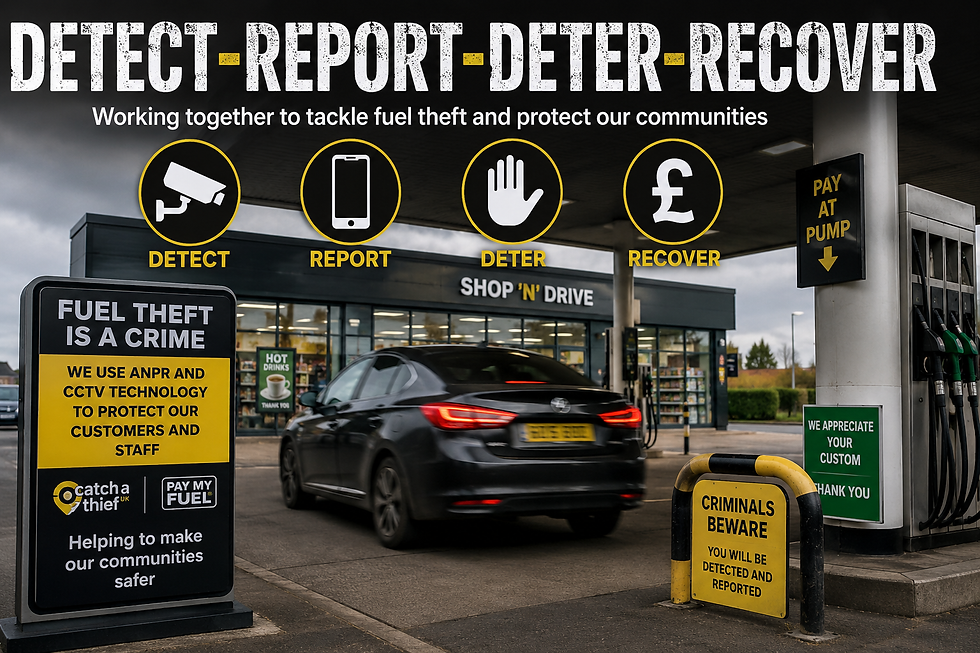
Detect – Report – Deter – Recover
Retail crime is no longer simply a shoplifting issue. It has evolved into a national policing, economic and public safety challenge involving organised crime, violence and growing pressure on Britain’s high streets.
Retailers, security teams, police forces and specialist recovery organisations are increasingly working together under a shared strategy:
Detect – Report – Deter – Recover
As the crisis continues, businesses across the UK are demanding stronger enforcement, faster police response and greater protection for frontline retail workers who continue to face abuse simply for doing their jobs.

*Catch a Thief UK News will continue monitoring developments surrounding retail crime, fuel theft, organised offending and the new UK policing measures designed to protect businesses, staff and communities.*


Comments